
从想象到大师
学生究竟是在“学习如何观看”,还是仅仅在重复一种已被内化的视觉符号系统?
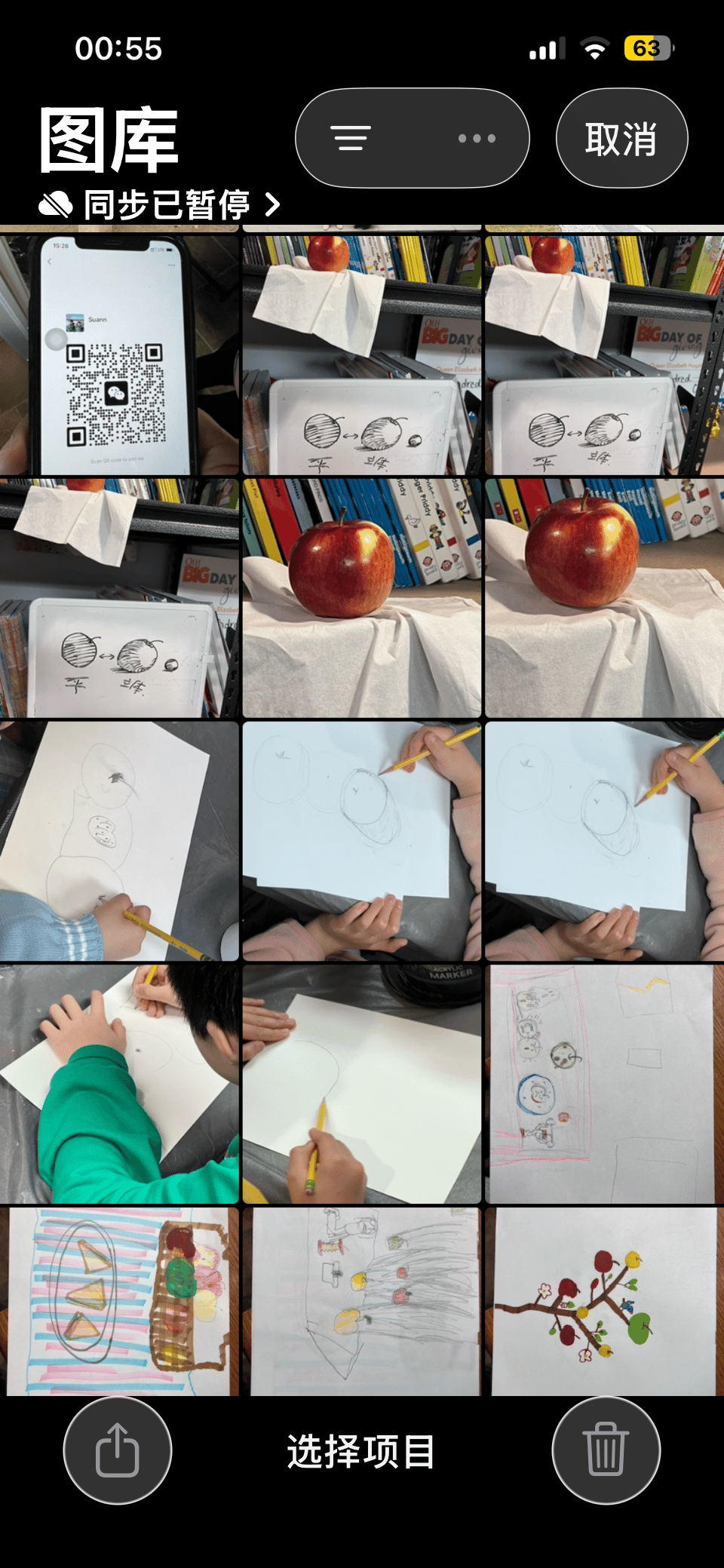
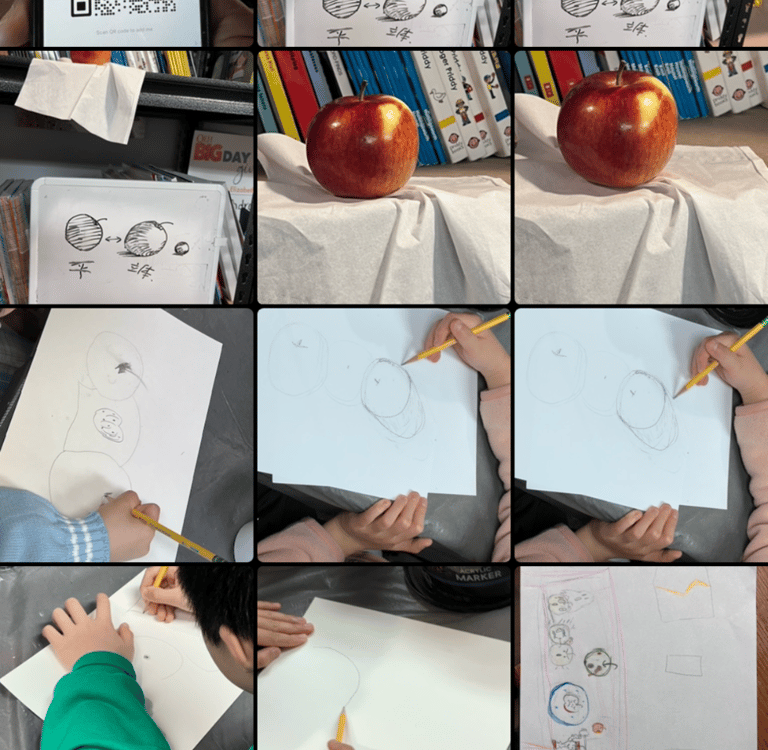
“制造观察饥饿感”的限时观察法在艺术教育中的应用
From Imagination to the Masters
The Pedagogical Use of Timed Observation to Create Perceptual Hunger in Art Education
在当代儿童与青少年艺术教育中,一个长期存在却较少被明确讨论的问题是:学生究竟是在学习如何观看,还是仅仅在重复一种已经被内化的视觉符号系统。
大量以成果为导向的艺术课程,往往通过范画、步骤分解和长期对照示范,快速提高作品完成度。但相关研究指出,这类教学模式容易削弱学生的主动观察能力与自主判断力,使“看”退化为“复制”(Winner, 1982;Eisner, 2002)。
A persistent yet often under-articulated issue in contemporary art education for children and adolescents concerns whether students are truly learning how to see, or merely repeating internalized visual symbol systems.
Outcome-driven instruction—characterized by step-by-step demonstrations and prolonged access to model images—can quickly improve surface-level results. However, research suggests that such approaches may undermine perceptual agency and independent judgment, reducing seeing to copying (Winner, 1982; Eisner, 2002).
基于这一背景,本文记录并分析了一种实践型教学路径——《从想象到大师》,以及其中的核心方法:制造观察饥饿感的限时观察法。
This article documents and analyzes a practice-based teaching model entitled From Imagination to the Masters, with particular focus on a core method: timed observation designed to create perceptual hunger.
该课程被设计为一个三阶段的认知递进结构:
想象 → 真实 → 大师。
想象阶段中,学生主要依赖记忆与经验进行绘画,从而自然暴露其符号化表达方式。真实阶段通过引入真实物体或现场观察,提高视觉复杂度,触发认知落差。大师阶段则引入艺术史作品,但不作为临摹对象,而是作为观看方式的示例。
The course follows a three-stage cognitive progression:
Imagination → Reality → Masters.
In the imagination stage, students draw primarily from memory, revealing symbolic habits of representation. The reality stage introduces real objects or direct observation, increasing perceptual complexity and cognitive tension. In the masters stage, art historical works are introduced not as models for imitation, but as examples of perceptual strategies.
这一结构与建构主义学习理论相一致,即学习并非被动接受,而是通过认知冲突与再组织逐步形成(Piaget, 1970;Vygotsky, 1978)。
This structure aligns with constructivist learning theory, which emphasizes knowledge formation through cognitive conflict and reorganization rather than direct transmission (Piaget, 1970; Vygotsky, 1978).
在该教学模型中,大师作品被明确界定为观察方式的示例,而非范画或“正确答案”。
以 Paul Cézanne 的静物作品为例,教学重点不在于风格再现,而在于其如何通过色彩与结构建构体积感与空间关系。这一处理方式避免了学生对权威图像的依赖,更强调判断力的形成而非复制能力。
Within this framework, master artworks are explicitly reframed as examples of perceptual organization rather than templates or correct answers.
Using still-life paintings by Paul Cézanne as an example, the instructional focus lies not in stylistic imitation but in how color and structure construct volume and spatial relationships. This approach reduces dependence on authoritative images and emphasizes the development of judgment rather than replication.
限时观察法是该课程中的关键操作机制之一。艺术作品仅在极短时间内展示,并设定明确的倒计时,到时即关闭,不允许反复对照。
其目的并非制造压力,而是刻意保留信息的不完整性,从而激活学生的主动观看、记忆整合与判断能力。
Timed observation functions as a key operational mechanism. Artworks are shown only briefly, with a clear countdown, and are removed immediately afterward without allowing repeated reference.
Rather than inducing pressure, the method intentionally preserves informational incompleteness, activating active perception, memory integration, and judgment.
这种教学设计与认知心理学中的“未完成效应”高度相关。研究表明,未完成的任务更容易在认知中持续存在,从而推动后续探索(Zeigarnik, 1927)。
This approach resonates with cognitive psychology research on the Zeigarnik Effect, which suggests that incomplete experiences remain cognitively active and motivate continued engagement (Zeigarnik, 1927).
一个显著的教学现象是,当观察未被完全满足,学习往往不会在课堂结束时终止。学生常在课后主动查阅相关艺术家的作品,进行视觉比较,并在后续创作中迁移新的观看方式。
这些行为并非由作业或评估驱动,而是内在动机自然延展的结果,与自我决定理论中对自主性的论述高度一致(Deci & Ryan, 2000)。
A notable outcome of this approach is that learning often continues beyond the classroom. Students frequently engage in voluntary exploration of artists and artworks, conduct self-initiated visual comparisons, and transfer perceptual strategies into subsequent work.
These behaviors are not assignment-driven but emerge from intrinsic motivation, aligning closely with Self-Determination Theory and its emphasis on autonomy (Deci & Ryan, 2000).
《从想象到大师》并非一门追求即时成果的课程。其核心目标是帮助学生建立更持久、更自主的观看方式。
在艺术教育中,真正稀缺的或许不是技法本身,而是保持未看完的勇气与兴趣。
From Imagination to the Masters does not prioritize immediate results. Its central aim is to cultivate durable and self-directed ways of seeing.
In art education, what may be most scarce is not technique itself, but the willingness to remain with what has not yet been fully seen.
© Liu Xin (Leo Liu), 2026
All rights reserved.
This text is an original work based on long-term artistic teaching practice and research.
No part of this article may be reproduced, adapted, or used for commercial purposes without written permission.
For citation or collaboration inquiries, please contact the author or visit yishu.ca.